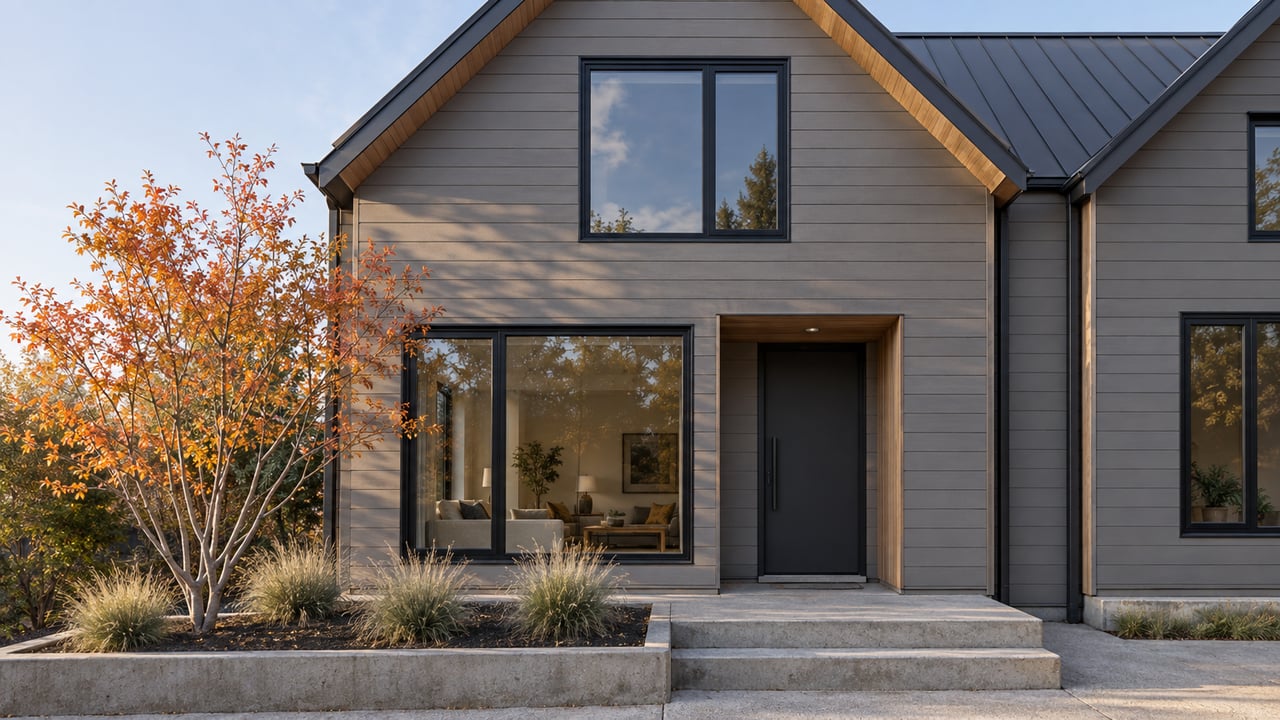
Pull two active listings from Bozeman's 59715 ZIP code on the same afternoon and you could easily find a foothill property near Sourdough Canyon asking well past a million dollars sitting a few miles from a two-bedroom condo near Montana State University asking a third of that. Both count as South Bozeman. Both feed the same median that shows up on every home-value site a buyer checks before calling an agent. An appraiser working either listing still has to decide which comps actually apply, because pulling from the wrong side of that median can put a value tens of thousands of dollars off in either direction.
That's the friction worth naming before anyone quotes a single number for this part of town.
As of July 2026, the median home value in the 59715 ZIP code, which covers South and Southeast Bozeman, sat at roughly $878,000. Citywide, Bozeman's median sale price came in at $650,000 for the three months ending in August 2026. That's a gap of more than $200,000 between the ZIP and the city it sits inside, and the gap isn't explained by one kind of home simply getting more expensive. It's explained by two kinds of home that rarely show up in the same buyer's search at all.
Which South Bozeman Are You Pricing?
One industry market update covering June 2026 put South and Southeast Bozeman's median list prices at $1.2 million or more, describing the segment as aimed at move-up and lifestyle buyers drawn by mountain views and acreage. That's the South Bozeman most people picture: established streets under mature cottonwoods and aspen, trail connections running from downtown toward the university, lots where a buyer is paying for a sightline to the Gallatin Range as much as for square footage.
That's one South Bozeman. It is not the only one.
The Other South Bozeman Was Built for Renters
Half a mile from the MSU campus sits a stretch of the city known officially as the South University District, and it runs on a different set of assumptions entirely. In 2025, New York based investor Clarion Partners partnered with Phoenix based Wentworth Property Co. to build Highmark, a 162-unit apartment and townhome community spread across an 8-acre site in the district. Clarion Partners managing director Jason Glasser framed the project as addressing "a popular area where home prices have become increasingly unaffordable."
Those 8 acres carry Qualified Opportunity Zone status, a federal designation that lets investors defer or reduce capital gains taxes on money they put into the tract. The zone's tax break was originally set to expire at the end of 2026. A federal budget bill made the program permanent instead, so the incentive that pulled a New York investment firm into this specific pocket of South Bozeman isn't a temporary window closing anytime soon.
That single detail changes what the ZIP's higher median is actually measuring. South Bozeman's premium isn't only about location. Part of it is being generated by a census tract that attracted institutional capital because of a tax structure, not because an investor wanted a mountain view.
Smaller Ownership Products Riding the Same Logic
Highmark itself is a rental community, so its units don't directly move a home-sale median. But smaller ownership products in the same corridor run on the identical logic, and those do factor into what gets recorded as a sale. Talbach House Condos, a short walk from campus, market themselves on maintenance-free living for owners who have no intention of occupying the unit. Lincoln Condos, down the street from the Brick Breeden Fieldhouse, offer secured entry and a heated garage built for a buyer thinking about the next renter as much as personal use. Elevation Townhomes, sixteen units of four-bedroom floor plans with fenced yards, was built with college renters as the target from the start.
None of these properties compete with a foothill acreage listing for the same buyer's attention. They're priced against the monthly rent a unit can generate, not against a view or a lot size.
Local business openings have already read this split. Khanom Thai, which built a following after opening its first Bozeman location off Huffine Lane in 2025, is opening a second on South 9th Avenue in the former S. 9th Bistro space, a move aimed at students, faculty, and campus-area households that a downtown-only opening never used to reach.
| Acreage and view homes | MSU-adjacent condos | |
|---|---|---|
| Example properties | foothill lots toward Sourdough Canyon and Painted Hills | Talbach House Condos, Lincoln Condos, Elevation Townhomes |
| Typical buyer | move-up and lifestyle families | investors and parents of MSU students |
| Price is driven by | mountain views, acreage, trail access | monthly rent the unit can generate |
| Financing lens | conventional owner-occupant appraisal | rental income and investor underwriting |
What the Split Means at the Closing Table
For a seller, this means the comp set matters more than the ZIP code. A single-family home a few blocks from Highmark shouldn't be priced off a foothill sale two miles away, and an agent pulling comps needs to filter by product type and proximity, not just postal code, or the resulting number will be wrong for either buyer walking through the door.
For a buyer financing a purchase, the split shows up in underwriting too. Lenders weigh how many units in a condo building are owner-occupied versus rented before approving conventional financing, and a project built around investor tenants can complicate that approval in ways a single-family purchase on an acreage lot never will. Anyone eyeing a condo near campus should ask about the building's owner-occupancy mix before getting attached to a specific unit.
For anyone comparing this ZIP against another Bozeman neighborhood using nothing but the median on a home-value site, the number is honest and incomplete at the same time. It's averaging a lifestyle purchase and a rental-income purchase that were never bidding against each other.
Does the ZIP code median tell me anything if I'm shopping for a single-family home in South Bozeman? Treat it as a starting point, not a price. A single-family home away from the university corridor is more likely priced near or above the $1.2 million figure cited for the south and southeast list market than near the ZIP's blended median.
Why do condos near MSU price differently than single-family homes a mile away? They're bought and appraised against rental income potential rather than lifestyle features, which is a different valuation logic than an acreage or view-driven purchase uses, and it shows up in both the asking price and the financing.
If you're weighing a purchase or a listing anywhere between the foothills and the Brick Breeden Fieldhouse, the comp set matters more than the ZIP code average. Bert & Mikey Real Estate has worked both sides of that line for buyers and sellers across Bozeman and the Gallatin Valley. Contact us to start your home search or request a free home valuation.
